
Average Cost to Install a Garage Door
Garage door installation costs vary more than most homeowners expect, largely driven by door size, material, and insulation — not by which town you live in. This guide breaks down real installed pricing across every common door type, so you know what to expect before you call for a quote.
Installation Cost by Door Type
| Door Type | Installed Cost Range |
|---|---|
| Single-car steel (non-insulated) | $900–$1,600 |
| Double-car steel (non-insulated) | $1,100–$2,600 |
| Single-car insulated steel | $1,300–$2,200 |
| Double-car insulated steel | $1,800–$3,400 |
| Wood composite / carriage-house style | $2,500–$4,500 |
| Custom or oversized doors | $3,000–$6,000+ |
These ranges reflect installed pricing including standard hardware. Call 1-845-458-1998 for a precise quote based on your home.
What Affects Your Installation Price
- Door size — single vs. double car, and any custom widths
- Material — steel, insulated steel, wood composite, or aluminum
- Insulation rating, if energy efficiency is a priority
- Whether opener, track, and hardware are being replaced too
- Structural changes to the opening (rare, but significantly increases cost)
- Matching an existing architectural style in older neighborhoods
Repair vs. Replace: A Decision Tree
Common Homeowner Mistakes
Choosing a door based on price alone without considering insulation value in an attached garage, skipping professional measurement (a mismatched door size leads to costly rework), and not budgeting for opener compatibility — heavier insulated doors sometimes require an opener upgrade too.
Real-World Scenario: The Quote That Doubled After Removal Began
A frequent surprise in older homes: a homeowner gets a quote based on a standard visual assessment, then during removal of the old door, the technician discovers the wood framing around the opening has rot damage hidden behind the trim, or the header isn't properly sized for the new door's weight. This isn't a bait-and-switch — it's a genuine discovery that only becomes visible once the old door is out. Homes built or renovated more than 25-30 years ago carry meaningfully higher risk of this kind of surprise, especially in older Hudson Valley housing stock near the river corridors where moisture exposure is higher. Budgeting a contingency of 10-15% above your initial quote for older homes isn't pessimism — it's realistic planning.
Cost Reasoning: Why Two "Standard" Doors Can Price So Differently
Homeowners are often surprised that two seemingly identical double-car steel doors can be quoted $800 apart. The reasons are rarely obvious from the showroom: gauge of steel (24-gauge vs. 25-gauge affects both durability and price), whether the insulation is polystyrene (cheaper) or polyurethane (better R-value, costs more but performs significantly better), hardware quality (standard vs. heavy-duty rollers and hinges, which affect long-term maintenance costs more than upfront price), and warranty terms (some manufacturers offer meaningfully longer warranties at a modest price premium that pays for itself if anything fails in year 8 instead of year 20). The cheapest quote and the best value quote are not always the same door.
Edge Cases That Change the Calculation
- Oversized or custom openings: Non-standard widths (common in older converted carriage houses or custom-built garages) often require special-order doors, adding both cost and lead time
- Historic district homes: Some Hudson Valley municipalities have design-review requirements for street-facing changes — factor in potential approval time before committing to a timeline
- Detached vs. attached garages: Detached garages sometimes have simpler electrical runs, which can actually reduce opener-installation costs slightly compared to attached garages with more complex wiring paths
- HOA-governed properties: Confirm approved colors/styles before ordering — a rejected non-compliant door means paying for changes twice
The Installation Day Process — What Actually Happens
Understanding the actual workflow explains both the time estimate and the cost: removal and disposal of the old door and hardware, inspection of the opening and framing (where hidden issues surface), installation of new tracks and hardware calibrated to the new door's exact weight, spring sizing and installation matched to the new door (critical — this is not the same spring as the old door unless the weight is identical), panel assembly and alignment, opener compatibility check and force/travel-limit recalibration, and a full safety test including auto-reverse. Skipping or rushing any of these steps is exactly how newly-installed doors end up with early spring failures or misaligned tracks within the first year.
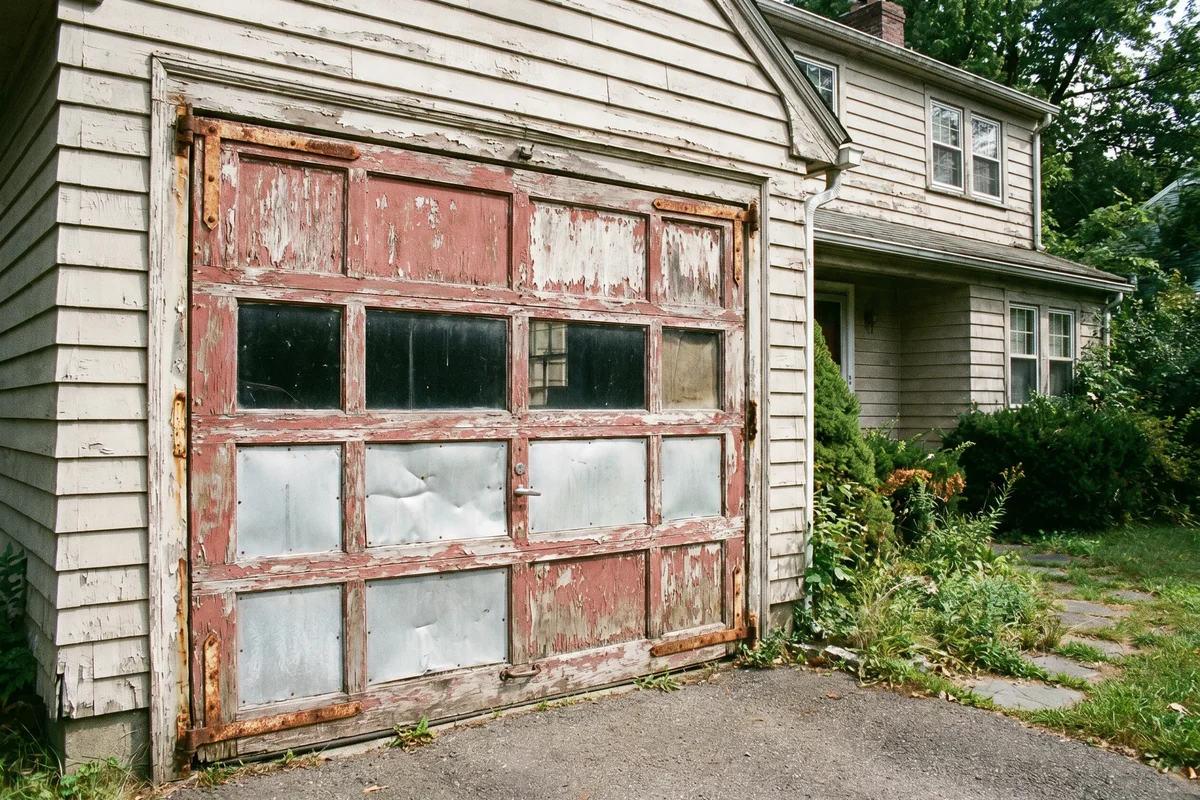
Before
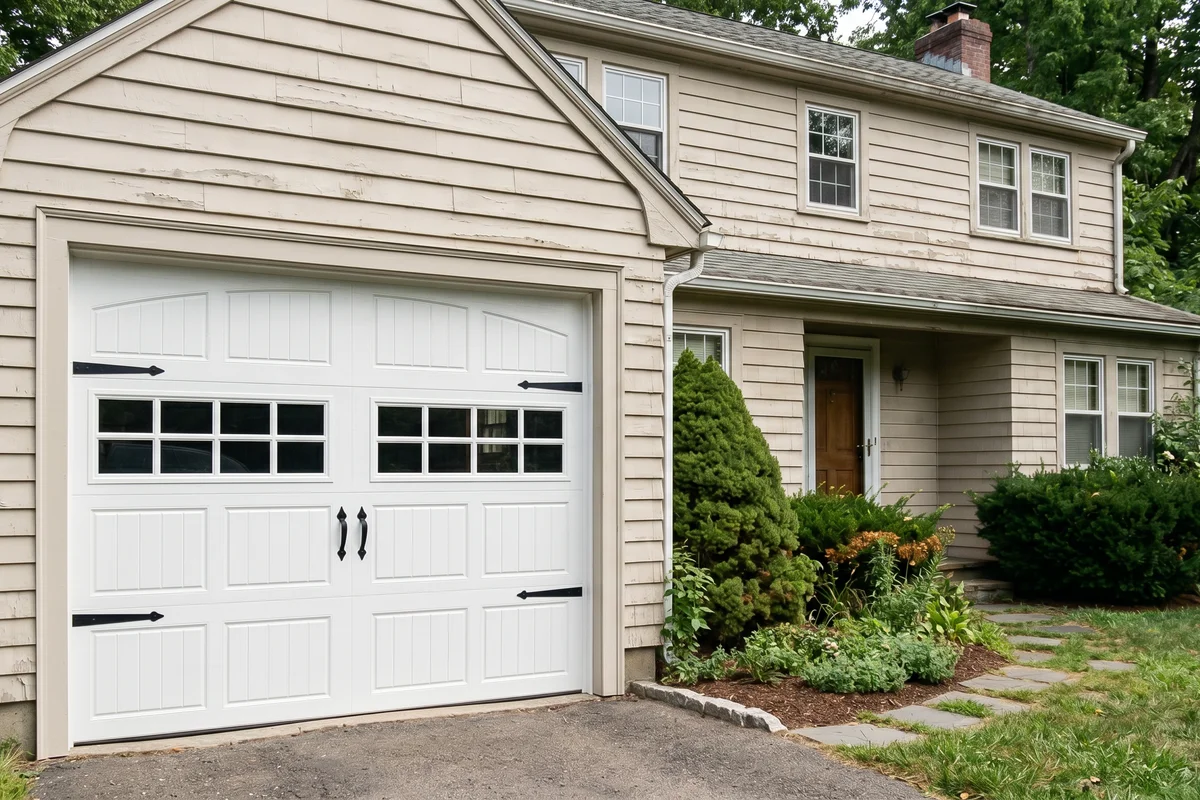
After
Repair vs. Replace: A Decision Tree
When NOT to Replace Yet
- If the only issue is a single damaged panel and the rest of the door (springs, opener, tracks) is in good condition — panel replacement is usually far cheaper
- If cosmetic wear is the main concern but the door is mechanically sound — repainting or refinishing may address it at a fraction of replacement cost
- If you're relocating within a year or two and won't benefit from the long-term energy savings of an insulated upgrade